Services

Custom Engineering Design Services

At Edge Sensors, we specialise in the design and development of ultra-low-power wireless electronics and smart sensing systems for industrial, environmental, and asset-tracking applications. Our engineering team can take your concept from initial requirements through to full production, providing expertise across every stage of the product lifecycle.

We can provide custom engineering design to meet your exact specifications, including:

  • Electronics Hardware Design

    • Embedded microcontroller and FPGA-based systems

    • Precision analog and mixed-signal design

    • Power management and energy harvesting for long-life, battery-free operation

    • RF, LoRa, BLE, and other low-power wireless transceiver design

    • Sensor interface and conditioning circuits (environmental, vibration, motion, etc.)

  • Embedded Firmware Development

    • Bare-metal and RTOS-based embedded software

    • Power-optimised firmware for multi-year battery life

    • Wireless communication stacks and network protocols

    • Over-the-air update and data encryption solutions

  • Mechanical and Industrial Design

    • Compact, ruggedised, and weather-sealed enclosures

    • Integration of sensors, antennas, and power systems

    • 3D CAD, additive manufacturing, and DFM (Design for Manufacture)

  • System Integration and Testing

    • End-to-end wireless network design and gateway integration

    • Field testing, RF compliance, and EMC certification

    • Automated test and calibration systems

  • Prototyping and Production Support

    • Rapid prototype assembly and validation

    • Pre-production pilot builds and manufacturing documentation

    • Supplier liaison and quality assurance

Below is a brief portfolio of some recent products developed for our customers, demonstrating our capabilities across a range of sensing, wireless, and embedded system technologies. 

Project Portfolio

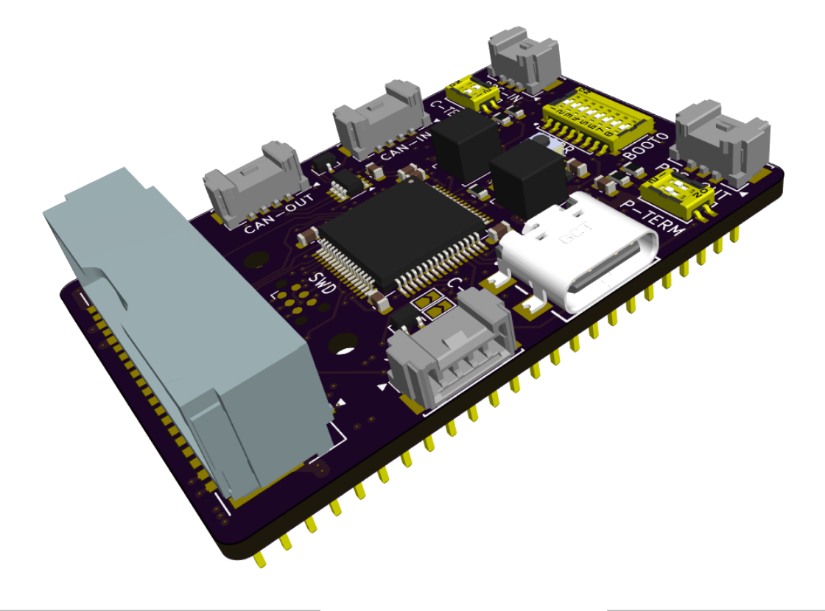
Configurable Control and IO module for rapid Robotics Prototyping


Feature Set

  • 1 x STM32G474RET6 CPU (512kb ROM, 128kb RAM)

  • 1 x SWD port (programming/debugging)

  • 1 x USB 2.0 port

  • 2 x CAN-FD ports

  • 3 x USART ports

  • 4 x SPI ports

  • 1 x I2C port

  • 1 x PPS, (Pulse-Per-Second) port

  • 2 x 12-Bit ADC inputs

  • 1 x 12-Bit DAC output

  • 4-Phase Motor Bridge Driver outputs

  • 1 x Programmable Precision Analog Reference output

  • +5 Volt / 1.5 Amp Power Supply output

  • +3.3 Volt / 1.5 Amp Power Supply output

  • +3 Volt / 200 mA Analog Power Supply output

  • 7-Bit Dip-Switch User-Selectable CAN Bus address

  • Dip-Switch User-Selectable CAN-Bus termination

  • Dip-Switch User-Selectable PPS termination

  • Reset Button

  • Optional Module headers

Low-Power Wireless Concrete Curing Sensor
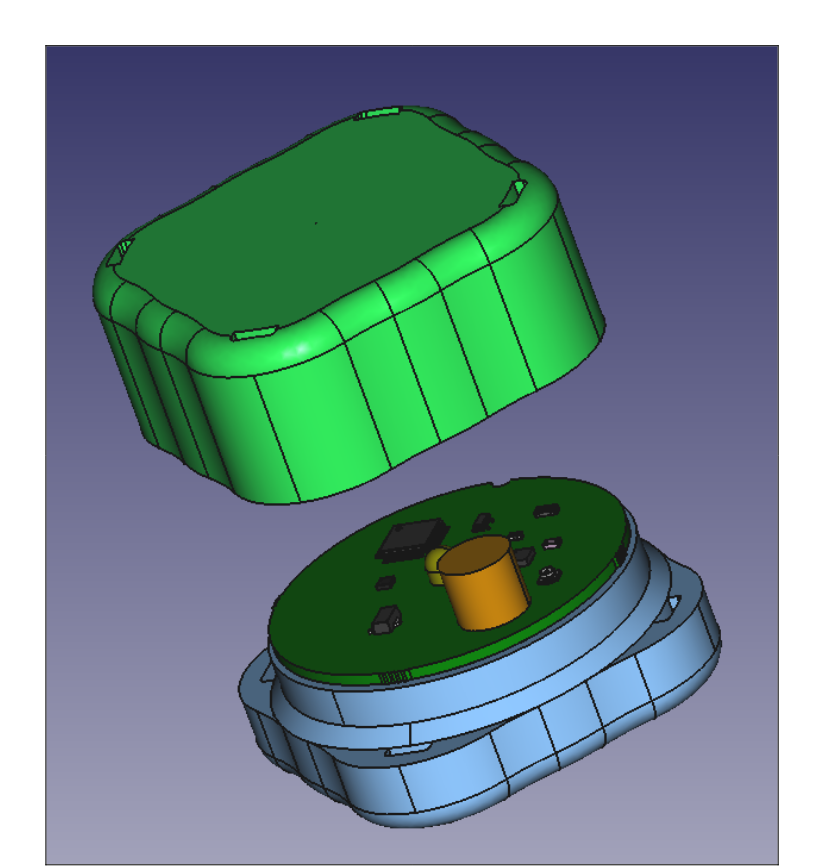

Wireless Concrete Curing Sensor


We designed a family of products for wirelessly monitoring concrete curing and building structural integrity. These sensors were low-cost units intended to be permanently interred within the poured concrete. They could operate off internal battery power for several years initially providing hourly temperature and humidity data during the curing phase and then automatically switching to a structural monitoring mode to provide very precise tilt movement measurements.
The data was collected locally by a Gateway which transferred it to an off-site database where it could then be accessed by users via a web portal. The sensors had a signal range of up to two kilometres. A compatible wireless repeater was also designed that could extend their range effectively indefinitely.
We also designed a low-power wireless calibrated vibration sensor that could interface to the same gateways and could be used on building and mining sites to ensure that safety limits were not being exceeded.